How to Practice Low Tech Time Blocking with a Paper Planner and Timer
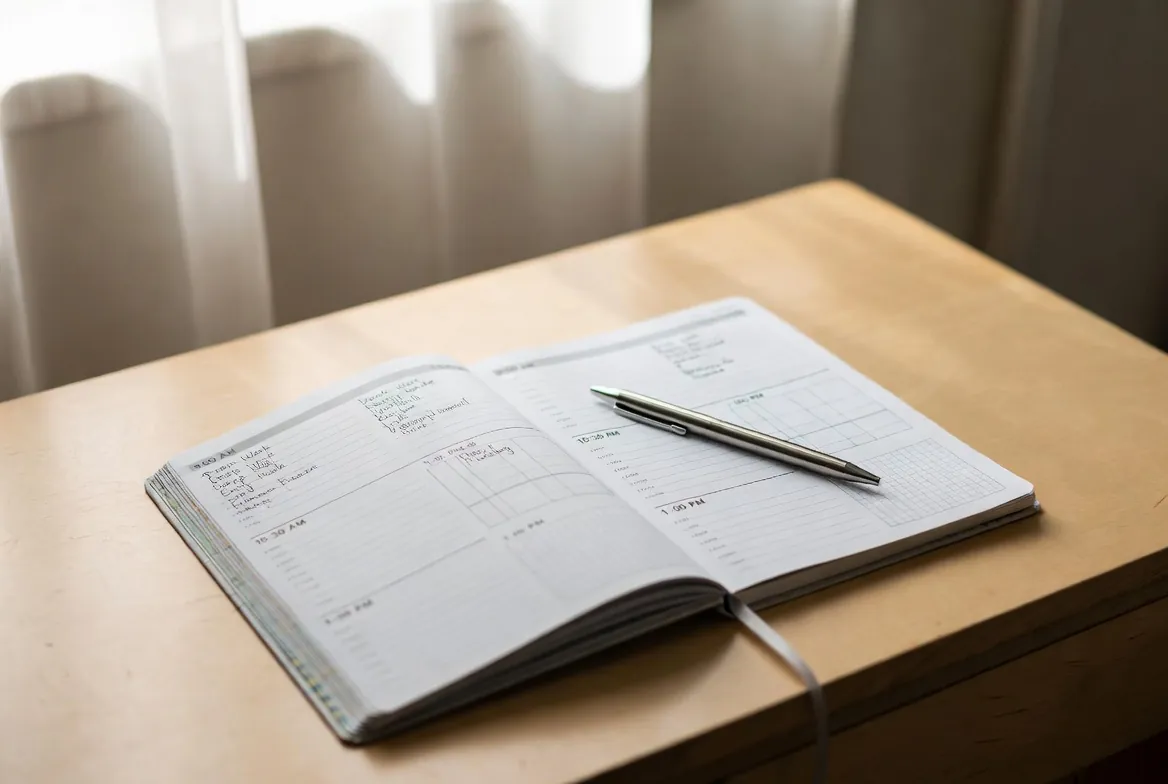
Low tech time blocking uses paper and a basic timer to divide the day into focused segments. This approach keeps planning visible and free from screens, which often lowers stress and supports steady attention on tasks.
Why Time Blocking Fits a Low Tech Living
Paper-based scheduling removes constant notifications and keeps the daily plan in one physical place. It encourages deliberate choices about how time is spent, which can reduce mental clutter. Many people find that writing blocks by hand helps them finish work with less fatigue and leaves more room for offline activities.
Tools That Support Analog Time Blocking
Choose a planner with enough space for hourly sections and a timer that operates without electricity or apps.
Paper Planners for Daily Structure
The Legend Planner Weekly & Monthly Productivity Planner features undated layouts with dedicated spaces for priorities and daily blocks. Its 120gsm paper holds up to repeated use and includes habit trackers that fit naturally into a time-blocked routine.
The Day Designer Daily Planner provides full pages with hourly lines and priority sections. The wirebound or hardcover formats stay open flat on a desk during planning sessions.
The Hobonichi Techo Daily Planner offers compact hourly timelines on thin, smooth Tomoe River paper. Its flexible pages allow custom block sizes without extra tools.
For fully custom grids, the LEUCHTTURM1917 Dotted Hardcover Notebook supplies numbered pages and an index. The dots make it simple to draw time blocks of any length while the hardcover protects the book during daily carry.
Timer for Focused Sessions
The Rotating Pomodoro Timer Cube uses preset intervals and a flip-to-start design. It vibrates at the end of each block, giving a clear signal without screens or sounds that might disturb others.
Setting Up a Low Tech Time Blocking Routine
- Open your chosen planner at the start of the week or day and list the main tasks that need attention.
- Draw or write time blocks in hourly or half-hour increments, leaving short gaps for transitions.
- Place the rotating timer on your desk and flip it to begin the first block.
- When the timer signals the end of a block, mark completion in the planner and move to the next segment.
- Review the day’s blocks each evening and adjust the following day’s plan based on what actually occurred.
Maintaining the Practice
Keep the planner and timer in the same location so they become part of the daily environment. Use the same pen color for recurring blocks to make patterns easy to spot. Over time, this system tends to create clearer boundaries between work and rest, supporting the steady, screen-light habits that define Low Tech Living.