Handwritten Letter Writing Revival: Templates and Low-Cost Stationery Sources
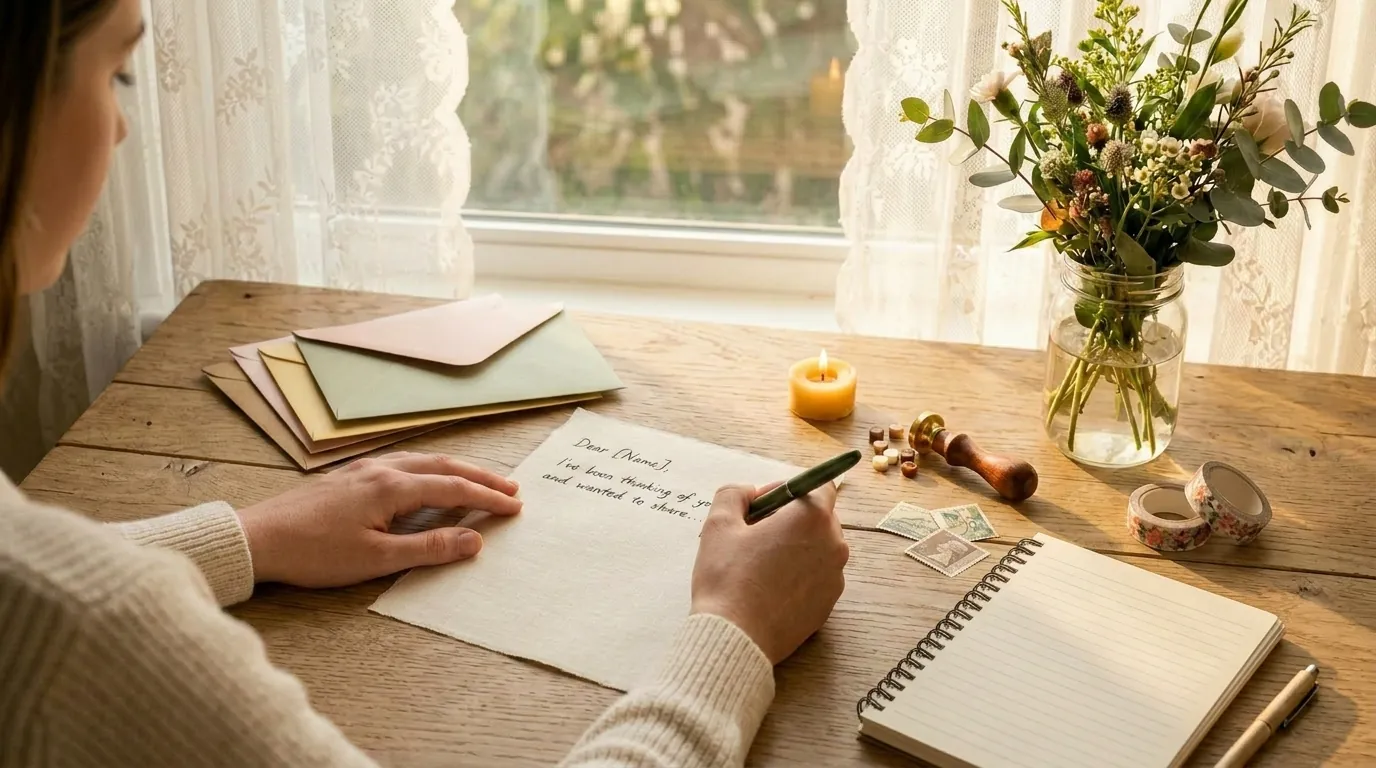
Handwritten letters deliver a level of connection that emails and texts cannot match. In 2026, when the average person handles over 120 digital messages daily, a single handwritten note stands out as intentional and memorable.
U.S. Postal Service data shows First-Class Mail volume has declined 50 percent since 2008, largely because personal correspondence has shifted to instant digital alternatives. Yet this shift comes at a cost: faster communication often feels less meaningful and more forgettable.
This guide covers the science-backed reasons to bring back handwritten letters, practical low-cost supplies, and five ready-to-use templates. The entire process costs less than a single month of premium streaming and requires no apps or subscriptions.
Why Handwritten Letters Still Matter in 2026
Digital messages arrive instantly but lack physical presence. A handwritten letter provides something tangible to hold, reread, and save. The slower pace forces clearer thinking and more deliberate wording, resulting in deeper communication.
Neuroscience supports the advantage. Research shows that forming letters by hand creates more elaborate brain connectivity than typing, particularly in regions linked to memory formation and information encoding. A separate 2025 study confirmed that handwriting activates broader neural networks involving motor, sensory, and cognitive processing—pathways that typing largely bypasses.
These effects extend beyond the writer. Recipients report stronger emotional responses to physical mail, and the letters often become keepsakes that last decades.
The environmental and financial angle also favors letters. One stamp and envelope replace dozens of data-heavy emails or video calls while using minimal resources.
The Cognitive and Emotional Benefits
Multiple studies highlight specific advantages:
- Improved memory and comprehension: Students who take notes by hand outperform typists on conceptual questions, according to foundational research still cited in 2025 reviews. The physical act of writing creates stronger encoding in the brain.
- Better spelling and recall: Elementary students produce higher-quality text with fewer spelling errors when writing by hand compared with typing.
- Enhanced focus and creativity: The slower pace reduces distractions and encourages deeper reflection—ideal for expressing gratitude, processing emotions, or maintaining long-distance relationships.
- Stronger personal bonds: Handwritten notes convey effort and care that digital formats dilute. Many families and friends preserve these letters as family history.
These benefits require no special equipment. A pen and paper deliver results that no app can replicate.
Low-Cost Stationery Sources for 2026
Quality materials do not need to be expensive. The following options keep total startup costs to $20 while delivering reliable performance.
Envelopes and paper
- 100-pack of vintage-styled lined letter stationary for $10.
- 48-pack of beautiful antique-looking envelopes for $10
Pens
- Gel or rollerball pens from Amazon or office supply stores: Packs for $6–8. Brands like Pilot G2 or generic equivalents offer smooth flow without smudging.
- Avoid fountain pens initially unless already owned; stick to reliable ballpoints for beginners.
Stamps
- USPS Forever stamps: $0.78 each as of 2026 for standard 1-ounce letters. Buy a booklet of 20 for $15.60 and avoid rate worries.
Optional extras
- 6-pack of writing stationary for everyday writing and note-taking for $10
- Personalized or Plain address labels for $5-10
- Address book or index cards on rings for keeping recipient details organized.
Five Ready-to-Use Handwritten Letter Templates
Copy these structures onto paper and customize with personal details. Each follows a clear format: greeting, body, closing.
1. Thank-You Note
Dear [Name],
Thank you so much for [specific action or gift]. Your [kindness/generosity] made [occasion] truly special. I especially appreciated [personal detail].
It means a great deal to know you were thinking of me. I look forward to seeing you again soon.
Warmly,
[Your Name]
2. Family Update
Dear [Family Member],
I hope this letter finds you well. Life here has been [brief positive note about routine or recent event].
[Share 2–3 specific updates: a new habit, a garden success, a simple project.]
How have things been on your end? I’d love to hear about [their recent interest or activity].
Sending love and looking forward to your reply,
[Your Name]
3. Friend Catch-Up
Hi [Name],
It’s been too long since we last connected properly. I’ve been thinking about [shared memory] lately and wanted to drop you a quick note.
[Update on life + question about theirs.]
Let’s plan a call or another letter soon. In the meantime, know I’m cheering you on with [specific encouragement].
Take care,
[Your Name]
4. Sympathy / Condolence
Dear [Name],
I was so sorry to hear about [loss]. [Name of deceased] was [brief positive memory or quality].
Please know you’re in my thoughts during this difficult time. If there is anything I can do—whether a meal, errand, or just someone to listen—please reach out.
With deepest sympathy,
[Your Name]
5. Encouragement Note
Dear [Name],
I wanted to send a quick note to say how much I admire the way you’re handling [situation]. Your [strength, resilience, creativity] continues to inspire me.
Remember that [encouraging reminder]. You’ve got this.
Thinking of you and sending support,
[Your Name]
Print or hand-copy these templates as needed. They provide structure while leaving room for authentic details.
Practical Tips for Consistent Letter Writing
- Set a simple schedule: One letter per week or on the first Sunday of the month.
- Batch supplies: Keep paper, envelopes, pens, and stamps in one dedicated drawer or box.
- Use a physical address book or index cards to track birthdays and anniversaries.
- Start small: Begin with thank-you notes or short updates rather than long essays.
- Track outgoing mail on a wall calendar for motivation.
These habits integrate easily with other low-tech routines such as analog planning and phone-free mornings.
Common Challenges and Simple Solutions
- “I don’t know what to say” → Use one of the templates above and add just two or three personal sentences.
- Handwriting feels slow or messy → Practice for five minutes daily. Legibility improves quickly; focus on comfort over perfection.
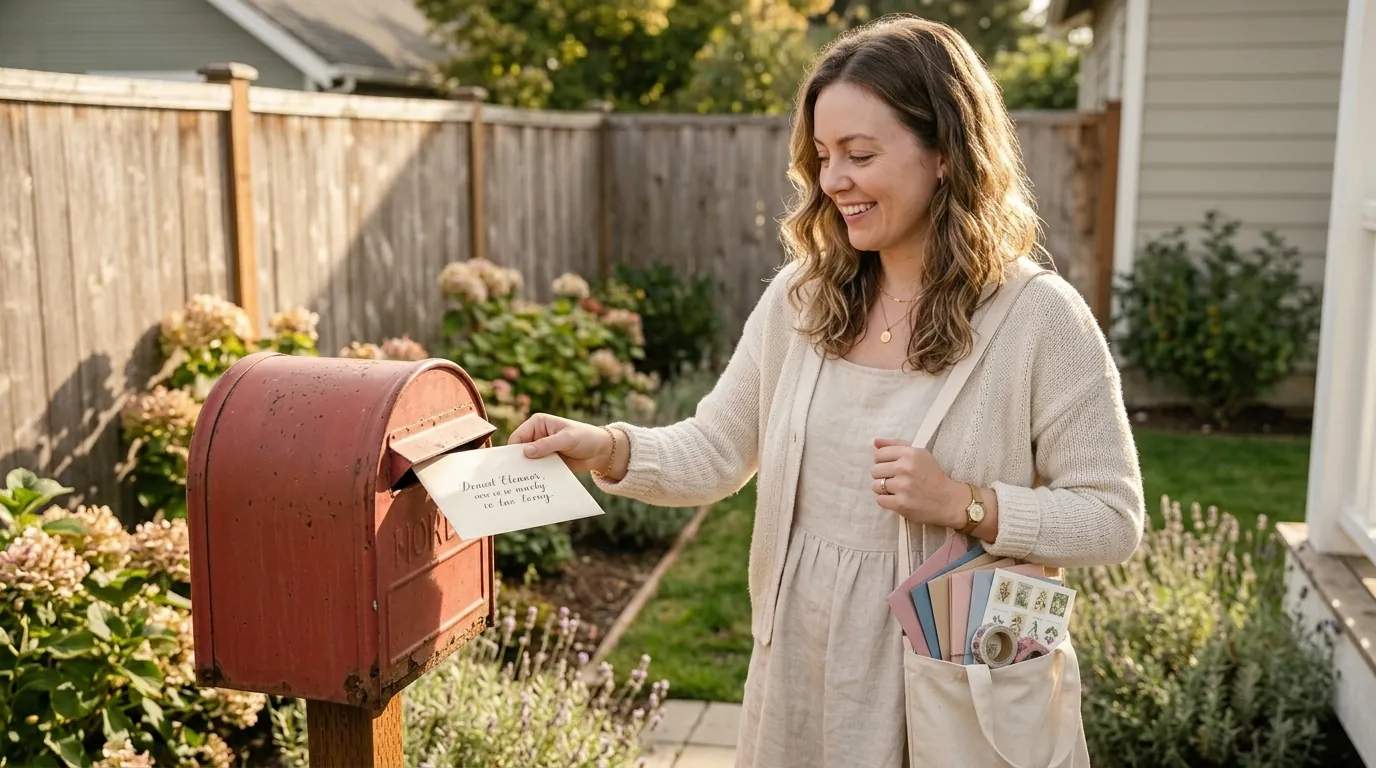
- Forgetting to mail → Address and stamp the envelope immediately after writing, then place it by the door.
- Cost concerns → One letter costs less than $1 including postage—far cheaper than a coffee or digital subscription.
Bring Back the Lost Art of Letters
Handwritten correspondence offers a low-tech way to strengthen relationships, sharpen thinking, and create lasting keepsakes. With postage at $0.78 and basic supplies available for pennies, there has never been a more affordable time to start.
Choose one template today, gather supplies from the sources listed, and send a single letter this week. The recipient will feel the difference immediately, and the simple act of writing will deliver benefits that last far longer than any notification.
Pair this practice with other analog habits already covered on lowtechliving.org for a more intentional daily rhythm. The revival of handwritten letters begins with one envelope and one stamp—start there and watch the connections grow.